


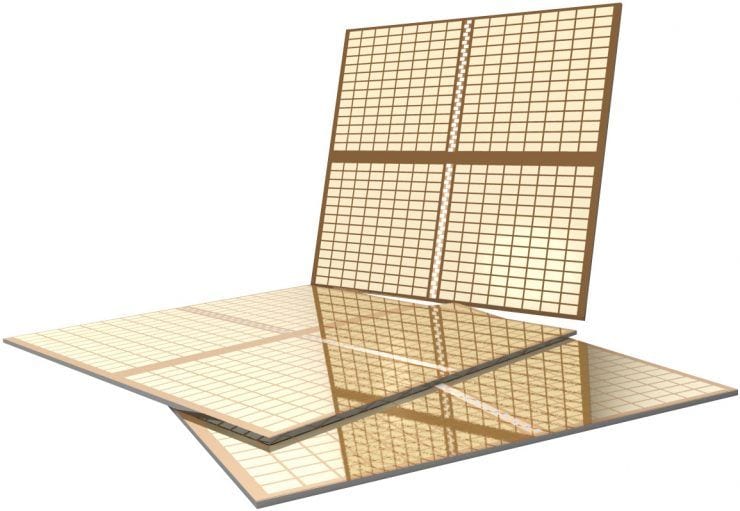
The development of the new DDR5 memories is quite advanced and at the same frequency they will be up to 36% higher than DDR4.
The prices of RAM memories are a real problem for users, although it is expected that in the coming months it will begin to adjust. Parallel to this, the Cadence company has given new information regarding the new DDR5 memories that are manufactured by Micron. The highlight is that they expect the first units to operate between 4266MHz and 6400MHz at a voltage of 1.1V, with possibly the use of two independent 32/40-bit channels per module.
First data of DDR5 memories suggest that it will be almost 40% faster than DDR4.
These new DDR5 memories will have a greater efficiency of the improved command bus because these channels will have their own 7-bit Addres (Add) and Command (Cmd) buses, improved update schemes and a greater number of bank groups for extra performance.
Cadence ensures that the functionality of the new DDR5 memories that the bandwidth is 36% higher when compared to the DDR4 operating at a frequency of 3200MHz, but the new DDR5 operating at 4800MHz shoot the difference in bandwidth up to 87 % more compared to DDR4 @ 3200MHz.
Perhaps one of the most interesting aspects of the new DDR5 memories is that the density of the chips will be able to reach beyond 16Gb, so it is possible that we will stop seeing 4Gb modules and they will all be at least 8Gb onwards.
Currently the main DRAM manufacturers already develop DDR4 chips and reach 16Gb per chip, although the units that use these memories have significant frequency limitations or high I / O speeds, because physics is a ruthless whore.
Companies like Micron are working hard to develop high-performance memory with high density under the DDR5 standard. The company is currently paying particular attention to variable retention times and other atomic events that could cause problems when DRAM output hits 10-12nm lithographs.
Their arrival on the market will be in 2019, but they will not arrive for the domestic user, in the first instance they will be destined for servers, Data Centers and very professional environments. For the general market they will arrive in 2020 and who could first support these memories is AMD with solutions based on the AMD Zen 3 architecture, although it is a bit early to provide reliable data.

Source: TPU


