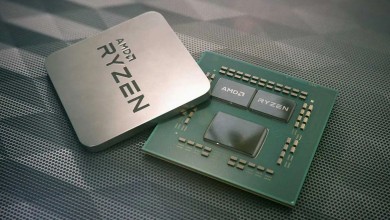
Although it will still be some time before the first laptop CPUs using Zen 4 appear , the most immediate thing on AMD's roadmap is its Mendocino SoC based on Zen 2. This SoC is intended for mainstream laptops.
The Mendocino APUs will launch next quarter, and to prepare for that launch, AMD has today updated its mobile processor numbering scheme to accommodate those future products.
This is how the next Ryzen APUs will be called according to their range and power
The new numbering system is quite similar to AMD's previous system, but AMD now dedicates a digit to represent the version of Zen architecture used. Since AMD plans to release the Zen 2 (Mendocino), Zen 3 (Rembrandt) and eventually Zen 4 (Phoenix) mobile APUs at the same time, they have decided that the nomenclature should better reveal the architecture used.

They consider them " a necessary evil " to avoid any suggestion that AMD is misleading customers by offering multiple versions of the Zen architecture. According to the manufacturer, this is how the names for AMD's Ryzen Mobile product line will be decided for the coming years:
| Indicates | Values | |
| First Digit | model year | = 7 2023 = 8 2024 = 9 2025 |
| Second Digit | Market segment | 3 and 4 = Ryzen 3 5 and 6 = Ryzen 5 7 = Ryzen 7 8 = Ryzen 7 or Ryzen 9 9 = Ryzen 9 |
| Third Digit | CPU architecture (Zen) | 1 = Zen or Zen+ 2 = Zen 2 3 = Zen 3 4 = Zen 4 5 = Zen 5 |
| Fourth Digit | performance segment | 0 = Lower segment 5 = Upper segment |
| letter suffix | CPU TDP Range | HX = 55W or more HS = 35W U = 15W e = 9W C = Chromebook (between 15 and 28W) |
All of this should make a CPU's age, architecture, and overall performance easily identifiable. This is an important in the AMD numbering scheme. With the upcoming release of Zen 2-based Mendocino APUs, AMD is keen to ensure that it clearly discloses the architecture of the CPU used, so that consumers are not misled into thinking they are getting a chip based on a newer architecture like Zen. Four.
It appears that AMD will only update a portion of its chip lineup each calendar year , and that the model year digit will essentially be irrelevant in determining the architecture used. This allows AMD to maintain a single product stack comprised of different chip architectures while still providing the necessary disclosures to avoid misleading consumers.
Source: Anandtech