

Chipset BIOS size is causing support issues for certain Ryzen 3000 and RAID configurations


The 'old' chipset BIOS capability is causing problems to support AMD Ryzen 3000 and other features.
When AMD launched the first generation of processors, there were quite a few problems, especially by BIOS. Those motherboards came with very green BIOSes that caused RAM problems. Those problems are being repeated and now some new ones are added. The current problem is that any motherboard with AMD 400 Series and 300 Series chipset must be compatible with the Ryzen 3000.
MSI has revealed that the SPI Flash memory on the EEPROM chip that should hold the UEFI firmware of the new BIOS has limited capacity. It seems that the AGESA ComboAM4 1.0.0.3a microcode is very large and is causing problems in the beta BIOS. So much so that support for Athlon processors and A-Series Bristol Ridge @ 28nm APUs have been dropped.
Problems with the new AMD BIOSes
This problem is not new. Some manufacturers have already warned that due to the size the BIOS could not support the Ryzen 2000 on certain boards. Already with two generations of Ryzen processors, plus the APUs, plus the Athlon, plus the A-Series, the BIOS was almost full. There are many processors and the size of the BIOS is limited. Now the problem is amplified by having to support not only the Ryzen 3000 but also the new APUs.
And the problem goes further, because MSI would have removed the support for RAID configurations. Whoever has one of these configurations in their storage units will see how they get corrupted.
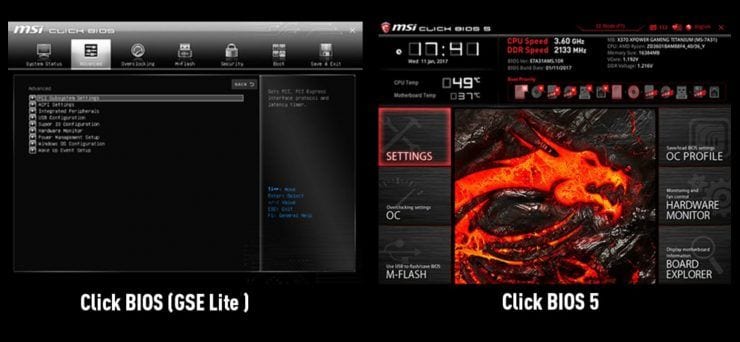
A lot of cuts have had to be made, such as the integrated UEFI application for BIOS 5. It has been called 'GSE Lite', because many features have been removed from the original application. The user interface is now 2D without animations and at very low resolution.
But we are talking about in the best of cases, since there are motherboards with a 16MB EEPROM. This forces the performance of the ROM to be further reduced to support the Ryzen 3000. Something that is corrected in the X570 chipset, which integrates 32MB. But this chipset, despite everything, does not offer support for the first generation Ryzen or the corresponding Ryzen APUs.
What to do in these cases?
The first thing, if we are not going to make the leap to the Ryzen 3000, is not to update the BIOS. If we did it and we had any of the supported processors, the system will not boot. But is that if we have a RAID configuration and update, it is possible that we lose all the data. A very serious problem that manufacturers are seeing how they solve.
Source: TPU


